Arts In Public Schools
1. Arts in Public Schools Programme and culture
The Arts in Public Schools Programme emerges as an urgent and necessary response to guarantee access to cultural rights for children and adolescents between the ages of 6 and 15 who attend public primary schools in areas with high levels of social and educational disadvantage, such as the Guerrero, Centro, Morelos and Peralvillo neighbourhoods in Mexico City. These areas, identified by INEGI and CONEVAL as priority areas, face structural conditions of inequality that limit the full exercise of cultural rights from childhood onwards.
Since its inception in 2006, promoted by ConArte with the support of the Ministry of Public Education, the programme was conceived as a strategy to counteract the scarce presence of the arts in public education and the limited educational offer in artistic disciplines. This situation has created deep gaps in access educational processes that recognise art as an essential component for integral development.
The population covered by the programme lives in conditions of high social and legal vulnerability. Many families depend on informal trade, are involved in national and international migration processes, belong to indigenous peoples, and face serious limitations in access to decent housing and basic services. In addition to these factors, high rates of violence have a direct impact on the daily lives of children and adolescents, restricting their right to live in safe and culturally active environments.
These conditions demand the implementation of policies and programmes that not only respond to material needs, but also recognise the cultural dimension as a fundamental right. In this sense, the legal framework, particularly Article 25 of the Constitution and Article 3 of the General Law of Social Development, recognises these areas as priorities, legitimising the creation of cultural, educational and community projects with a focus on territorial justice.
The territory where the programme is implemented is a diverse and multicultural space, but one that has been marked by processes of historical exclusion. In the absence of an inclusive and sustained cultural offer, it is urgent to generate strategies that promote artistic participation and access to cultural goods from childhood onwards. The Arts in Public Schools Programme thus contributes to the construction of alternative spaces for encounter, expression and training, where children and adolescents can fully exercise their cultural rights, developing creative capacities that strengthen their sense of belonging, build their own identity and exercise their capacity for action in their environment.
2. Goals and project implementation
2.1. Main aim and specific goals
- To guarantee the cultural rights of children and adolescents in public primary schools in the neighbourhoods where we operate. Through methodologies in arts education, culture of peace and a gender perspective, we seek to bridge the gap between educational and artistic communities.
- To build safe, creative and intercultural spaces within participating public primary schools, with the aim to positively impact the local context and contribute to the integral development of the families of the students we work with.
- To reduce the effects of violence on students in public primary schools: stress, depression, anxiety, aggressiveness, communication problems, lack of vision and ability to dream and desire, lack of creativity and motivation. We also encourage self-expression and self-esteem in children and adolescents in the basic primary schools we serve, including our own headquarters: Escuelita La Nana, recognising the needs of the local population.
- To provide accessible and dignified training within the Arts in Public Schools Programme, incorporating active listening to the needs of our population.
The specific goals are:
- Increase links with primary schools in the Guerrero neighbourhood and the Historic Centre by 50% compared to 2025, with the objective of implementing the Arts in Public Schools Programme in classrooms during the 2027-2028 school year.
- Hold the Art, School and Community meeting in 2026, 2027 and 2028.
- Involve at least 50 families in community activities linked to the programme.
- Integrate a bi-monthly feedback and follow-up mechanism with students and teachers.
The programme focuses on the materialisation of cultural rights, encouraging children and adolescents to exercise them as participants, learners, producers, creators and protagonists.
2.2. Development of the project
For 20 years, ConArte has been developing its own art-education methodologies to specifically address the problems faced by the educational communities it serves, adapting artistic practices to the specific needs of each context.
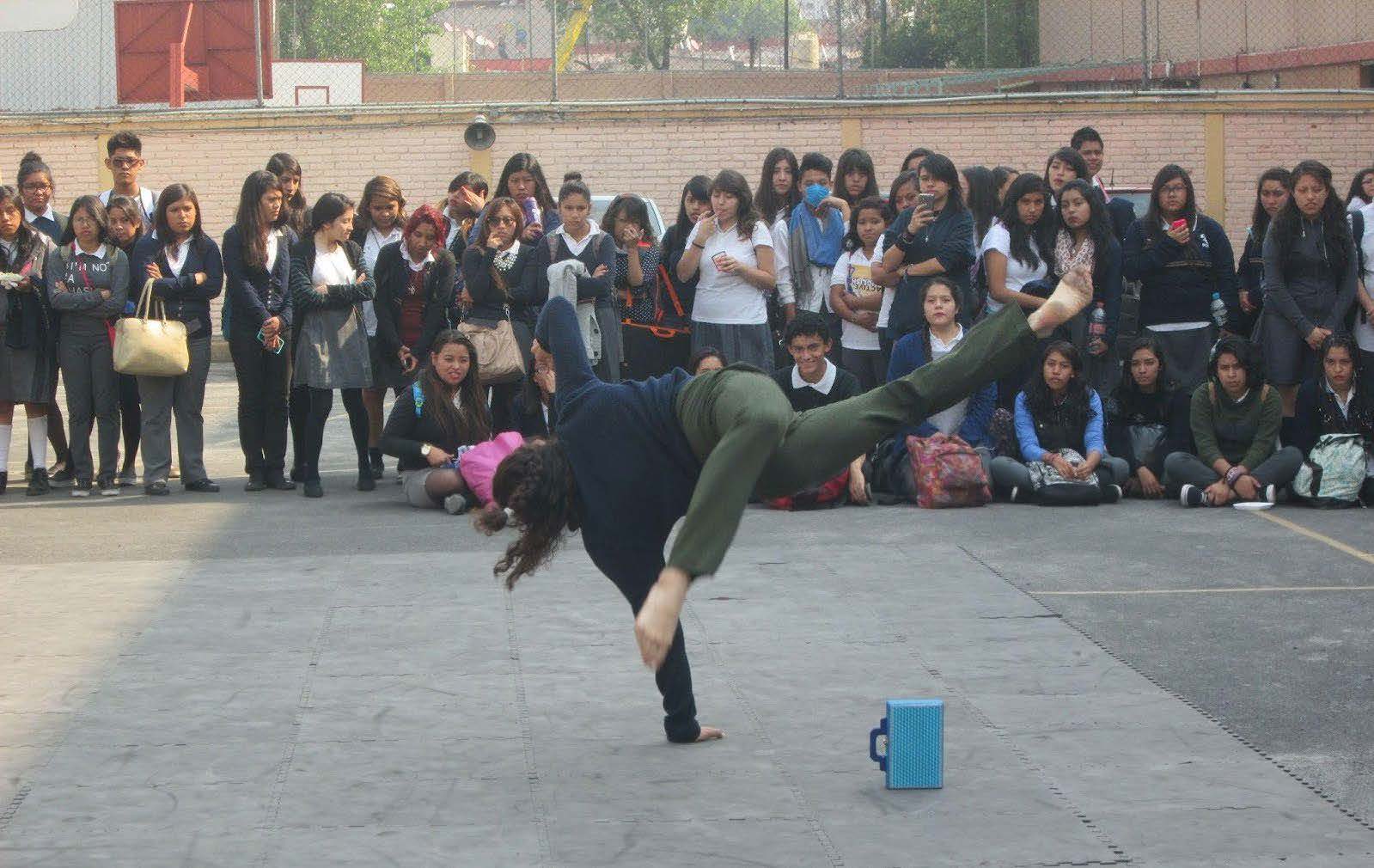
The Arts in Public Schools Programme focuses on the materialisation of cultural rights, encouraging children and adolescents to exercise them as participants, learners, producers, creators and protagonists. Through artistic languages such as dance, music, and visual, graphic and performing arts, reflections are encouraged on human rights, social and environmental issues, and on how art can transform reality and strengthen community belonging.
ConArte implements a holistic approach, in addition to addressing specific problems; it seeks long-term sustainable solutions. It considers systemic and structural violence, promotes intersectoral, interdisciplinary and inter-level work, constantly adapts actions to the needs, desires and interests of the community, and takes into account the complexity of contexts through attentive observation, active listening and relevant transformation. Programmes are designed from an understanding of the context and continuous dialogue with the community, ensuring relevance, inclusion and effectiveness, while strengthening artistic, expressive and social capacities.
3. Impacts
3.1. Direct impacts
The Arts in Public Schools Programme has directly benefited almost 500,000 children and adolescents since 2006, and more than 1,300,300 people indirectly. Since 2006 we have served more than 20 public primary schools, and at our headquarters, La Nana; Urban Laboratory of Committed Art, around 60% of our attendees are children and adolescents who seek to continue complementing their education in the arts. The impact is mainly manifested in:
- Teacher strengthening: Teachers consolidate methodologies and acquire creative and pedagogical tools to apply in their groups.
- Child and youth participation: Children and adolescents actively participate during the classes, as well as in the final exhibition of results, ‘Encuentro Arte, Escuela y Comunidad’ (Art, School and Community Encounter).
- Recognition of cultural rights: Through the methodologies, children and adolescents access, strengthen and recognise their cultural rights at primary schools.
- Testimonials and programme adjustments: Qualitative testimonials are collected through surveys and interviews, verifying the impact from the perspective of participants, teachers and families.
Request for the Arts in Public Schools Programme: Through various channels of communication, letters on ConArte letterhead have been sent requesting the expansion of the programme to more public schools within the working quadrant.
The programme shows that teacher training, the active participation of children and the recognition of their cultural rights generate a comprehensive, measurable and sustainable impact on the educational contexts served.
Overall, the programme shows that teacher training, the active participation of children and the recognition of their cultural rights generate a comprehensive, measurable and sustainable impact on the educational contexts served, contributing to the development of more creative, inclusive and diversity-friendly school environments, promoting artistic expression and community building.
3.2. Evaluation
To ensure the monitoring of the Programme and the measurement of its achievements, a comprehensive evaluation system is implemented that combines:
Quantitative: periodic reports, executive reports, attendance lists, registration forms and satisfaction surveys are used to document the sustained participation of children, adolescents and families, as well as the profile of beneficiaries and the relevance of the activities.
Qualitative: interviews, talks and oral and written testimonials from students, family members, teachers, managers and neighbours are collected to measure the Programme’s impact and the relevance of its contributions. This record is complemented with audiovisual material, such as photographic reports, videos and meeting reports, which illustrate the activities and serve as inputs for transparency and dissemination to strategic allies and funders.
These results include: number of schools and spaces benefited, quantity and diversity of activities implemented, level of attendance and continuity of participants, degree of satisfaction, diversity of audiences reached, production of documentation materials, demand for new activities, appropriation of cultural spaces, and participation in more primary schools in socially disadvantaged areas. The consolidation of local networks and the appropriation of methodologies are considered key indicators of impact.
This system guarantees the adequate use of resources, dignified access to cultural rights and the sustainability of the Programme from ConArte, in both the public and private spheres.
3.3. Key factors
- Proven methodologies to reduce violence through the arts. We work to strengthen the reinforcement of the Interdisciplinary Programme for Nonviolence and related methodologies to counteract unsafe environments for the groups we work with.
- ConArte is a community-based organisation. We integrate everyone who is part of the school community into the Arts in Public Schools Programme (teachers, administrators, family members, students, neighbours, etc.) seeking to create horizontal spaces of collaboration, which are evident in our activity schedules.
- In each process we listen to the community we serve to learn about their perspectives and continue to improve our actions together.
- A large percentage of decision-making is done collectively.
- We carry out participatory assessments and surveys with the programme's direct and indirect audiences.
- We hold weekly follow-up sessions with all departments within ConArte, which not only allows us to have a better communication, but also fosters a safe and comfortable space for teamwork, creating empathy and solidarity with our co-workers and allowing us to be informed about the processes in which our beneficiaries are involved.
- Planning community activities, listening to the needs and interests of children and adolescents, as well as their current life contexts.
- Recognition of knowledge, skills and experiences.
- Openness to new initiatives and methods.
- Exploratory practices with multiple intelligences of linguistic processes, basic pedagogical processes, emphasising multiple intelligences, stimuli and methods as formative processes, proposing to extend creativity and community as protagonists.
The Arts in Public Schools programme has directly benefited almost 500,000 children and adolescents since 2006.
3.4. Continuity
With Arts in Public Schools Programme we seek to:
- Continue to contribute to a greater reach and a positive impact on public primary schools.
- Be available and open to mothers, fathers or caregivers on issues of violence, comprehensive sexual education, and art and education.
- Ensure that students attend classes regularly. Seek the right connection between children and adolescents and their education.
- Ensure the continuity of their educational and cultural training.
- Continue to promote access to their cultural rights. Arts training as an opportunity for all.
- Ensure work continuity for teacher-artists.
- Increase spaces for cultural offer in public primary schools.
4. Further information
This article was written by María Fernanda Espitia Sánchez, Outreach Coordinator at ConArte, Mexico City. The photographs appearing in this good practice are property of ConArte.
Contact: procuracionfondos.conartemx (at) gmail.com
Website: www.conartemx.net
Social Networks: @ConArteMexico